Rhemalia
The title of the installation conveys a "malleable flow," symbolizing the dynamic, adaptive interplay between biotic memory (organic, evolutionary recollections in living systems) and abiotic memory (inorganic imprints preserved in natural media like water or stone), where temporal processes erode and reform without rigid causation, aligning with themes of acausality and unintentional incorporation.
This title enhances the conceptual framework by emphasizing the fluid, transformative nature of memory's reuse across realms, transcending human thought through natural erosion. As a replacement, it maintains linguistic elegance while introducing a layer of poetic malleability, making it suitable for installations exploring epekimnesis, where water's unintentional absorption of past events mirrors the softening of biotic traces into abiotic archives.
Aesthetic Perspective
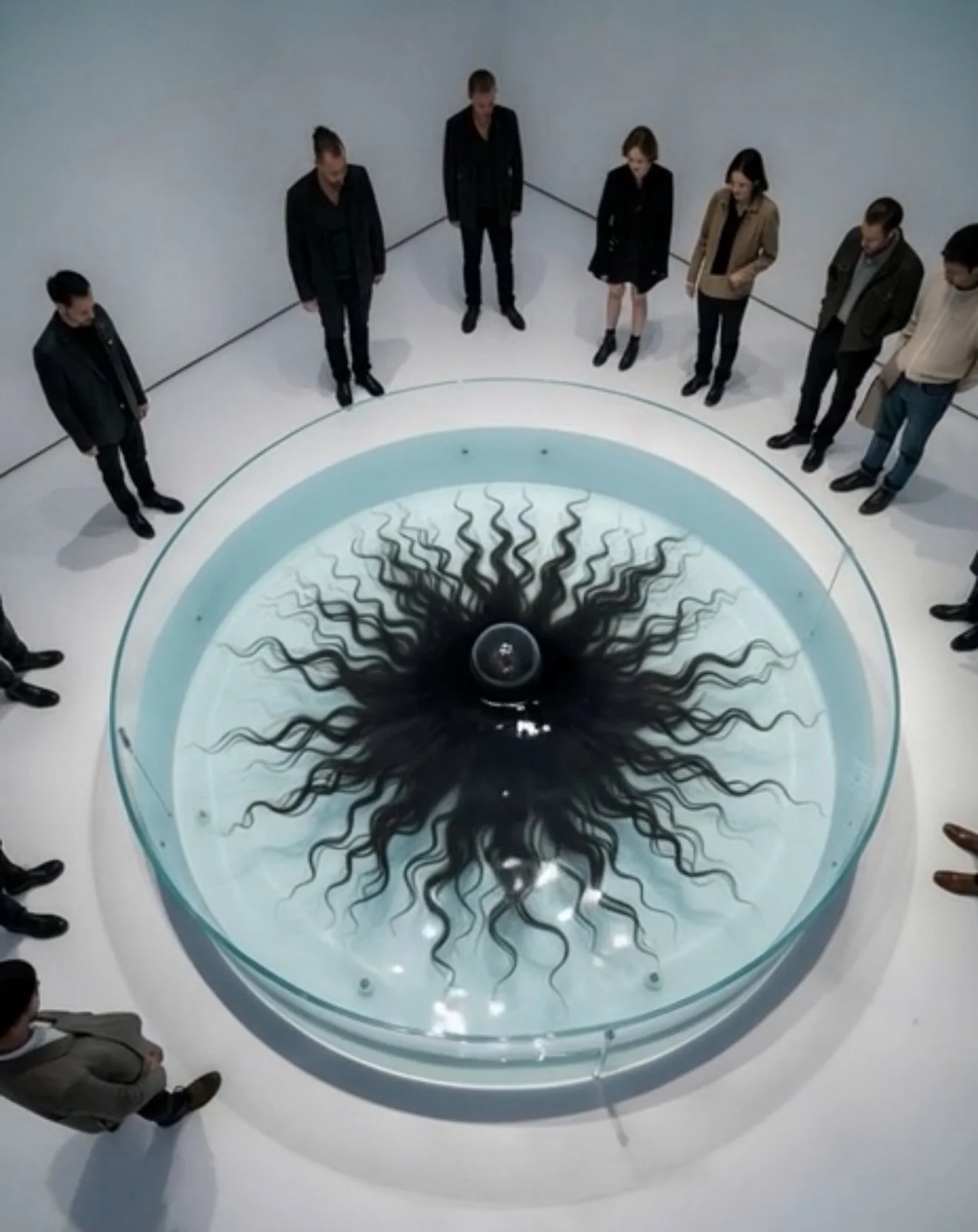
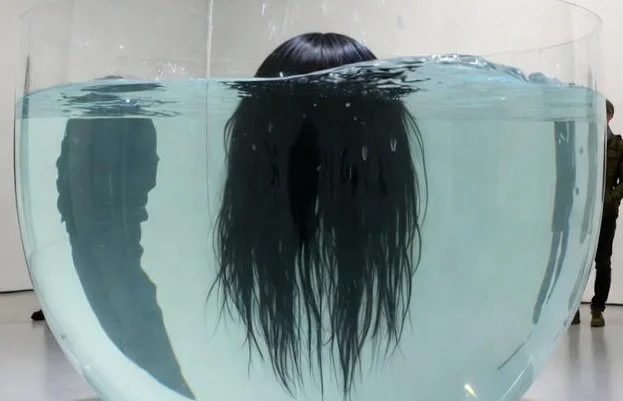
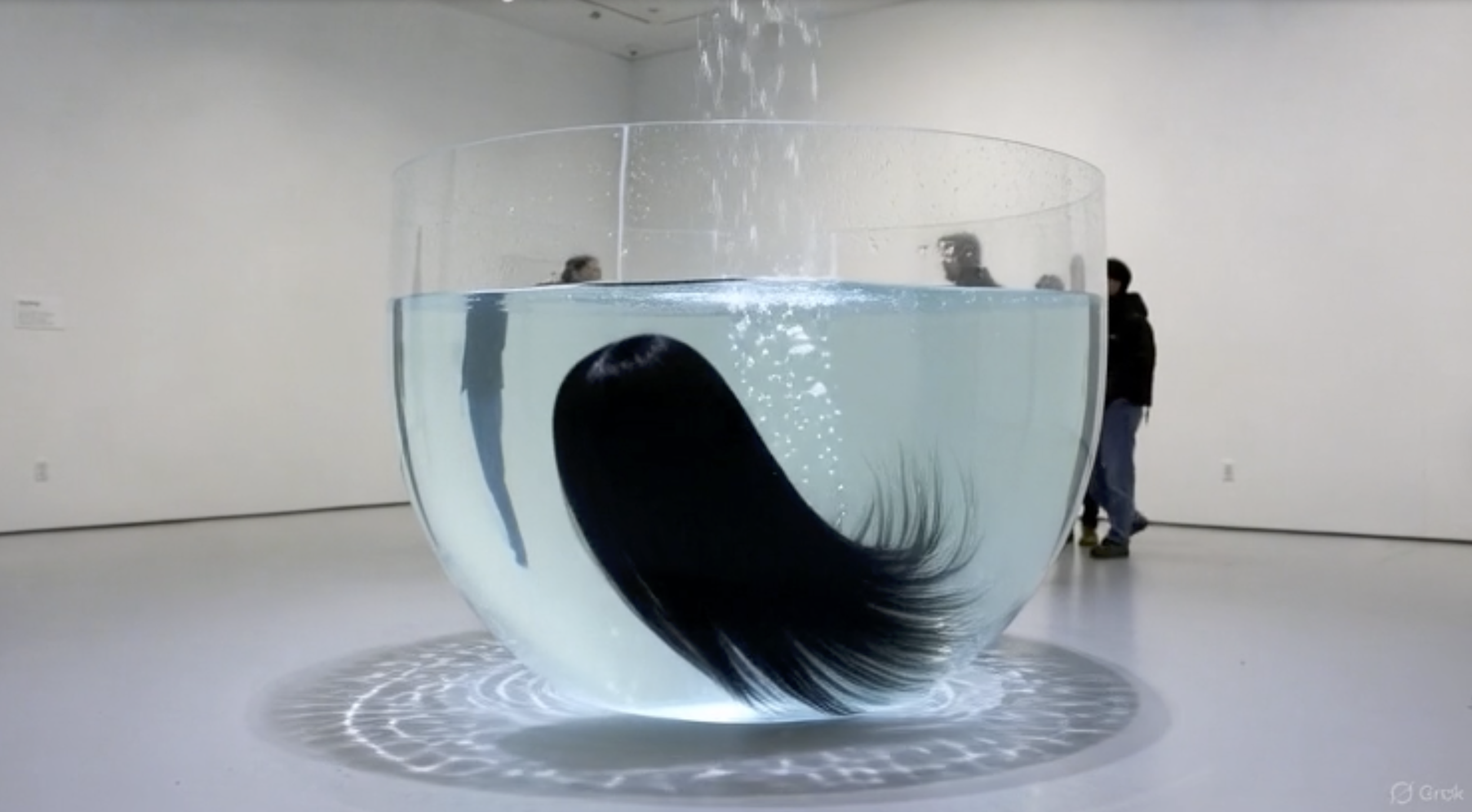
The installation "Rhemalia" features a large, transparent round water tank (10 feet in diameter, 3.5 feet high) as its focal point, with a 6-foot black hair wig submerging and emerging in 7-minute cycles, activated by audience proximity. Aesthetically, this establishes a delicate harmony between the water's luminous transparency and the human hair's malleable, undulating forms—swaying softly left and right with water currents during submersion, then releasing fluid drips that evolve from gentle cascades to lingering suspensions upon emergence. The fibre-mounted ball mechanism facilitates seamless fluidity, amplifying the visual poetry of adaptability and release. In a light room with nuanced contrasts, the black wig against the water's prismatic surface conjures an atmosphere of subtle metamorphosis. At the same time, audience-triggered activation infuses spontaneity, rendering each cycle a distinctive aesthetic encounter that harmonizes restraint with tactile grace.
Philosophical Perspective
Philosophically, "Rhemalia" embodies the interplay of epekimnesis and temporal images by positioning water as an abiotic medium that malleably incorporates biotic elements—hair as a symbol of human evolutionary adaptability (hair's responsive history)—through softening, erosion-like processes. The audience's proximity intervention activates the cycle in a malleable manner, revealing an unintentional blend of past events (e.g., the wig's "memory" of organic form) and present interactions without a fixed direction. This underscores a beyond-human-thought framework, where hair submersion and dripping represent the softening of biotic traces into abiotic receptacles, evoking metamorphosis through matter's malleable reuse: hair, once biotic, now yields and reshapes as water's currents reshape it, symbolizing a continuous, non-anthropocentric existence liberated from rigid structures.
Artistic Perspective
Artistically, the piece innovates by converting passive observation into malleable activation: audience presence—detected by sensors—triggers the wig's cycle, merging installation art with adaptive performance. This cultivates variability in timing and manifestation, resonating with relational aesthetics and echoing precedents such as Rebecca Horn's kinetic extensions. The 7-minute rhythm instills a sense of pliable duration, inviting viewers to engage temporally, as the wig's movements (soft waving in currents, dripping with yielding pauses) forge an adaptive narrative. The setup's elegance heightens conceptual malleability, framing the work as a speculative inquiry into the pliancy of human-nature, while demanding meticulous calibration to sustain flexibility across iterations.
Critique
From the perspective of a critic attuned to the elite echelons of contemporary art—echoing the curatorial rigor of the best NYC exhibitions, where works by Jeff Koons or Damien Hirst redefine materiality and interaction—"Rhemalia" stands as a masterful synthesis of conceptual pliancy and sensory refinement. Its audience-activated mechanism elevates the installation to a performative adaptation, ingeniously weaving epekimnesis into a lived experience that transcends mere spectacle, much like Marina Abramović's endurance pieces but infused with ecological pliancy. Aesthetically impeccable in its yielding palette and kinetic subtlety, the piece commands space with mesmerizing adaptability, evoking a primal negotiation with temporality that rivals Eliasson's perceptual manipulations. Philosophically, it rigorously interrogates anthropocentrism, positing water as a yielding archivist of biotic remnants, a theme poised to resonate amid global climate dialogues. Artistically, the integration of malleable erosion through the wig's cycles marks Nedko Water as a visionary, with potential for landmark status if scaled for immersive venues like the Turbine Hall—demanding flawless technical execution to cement its legacy in speculative realism.