CITY-SEN-SHIP
Flowevent in the form of a Floating Protocol
The city as matter. Pier 64 as the subject. CITY-SEN-SHIP as belonging to a place rather than belonging to a human.
Description
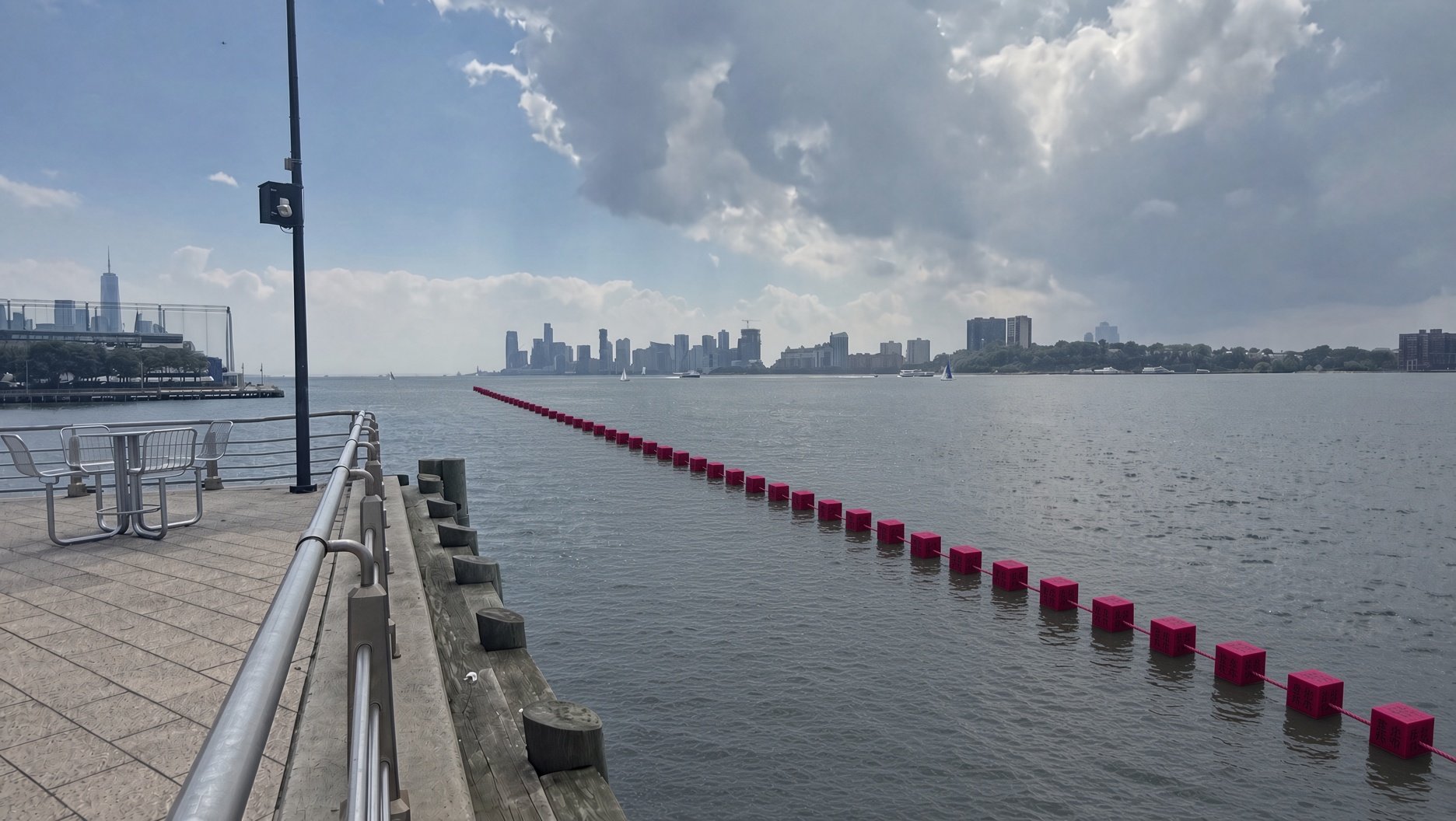
Place: Pier 64, Hudson River Park, Manhattan
The cube: The purest single form of the CITY.
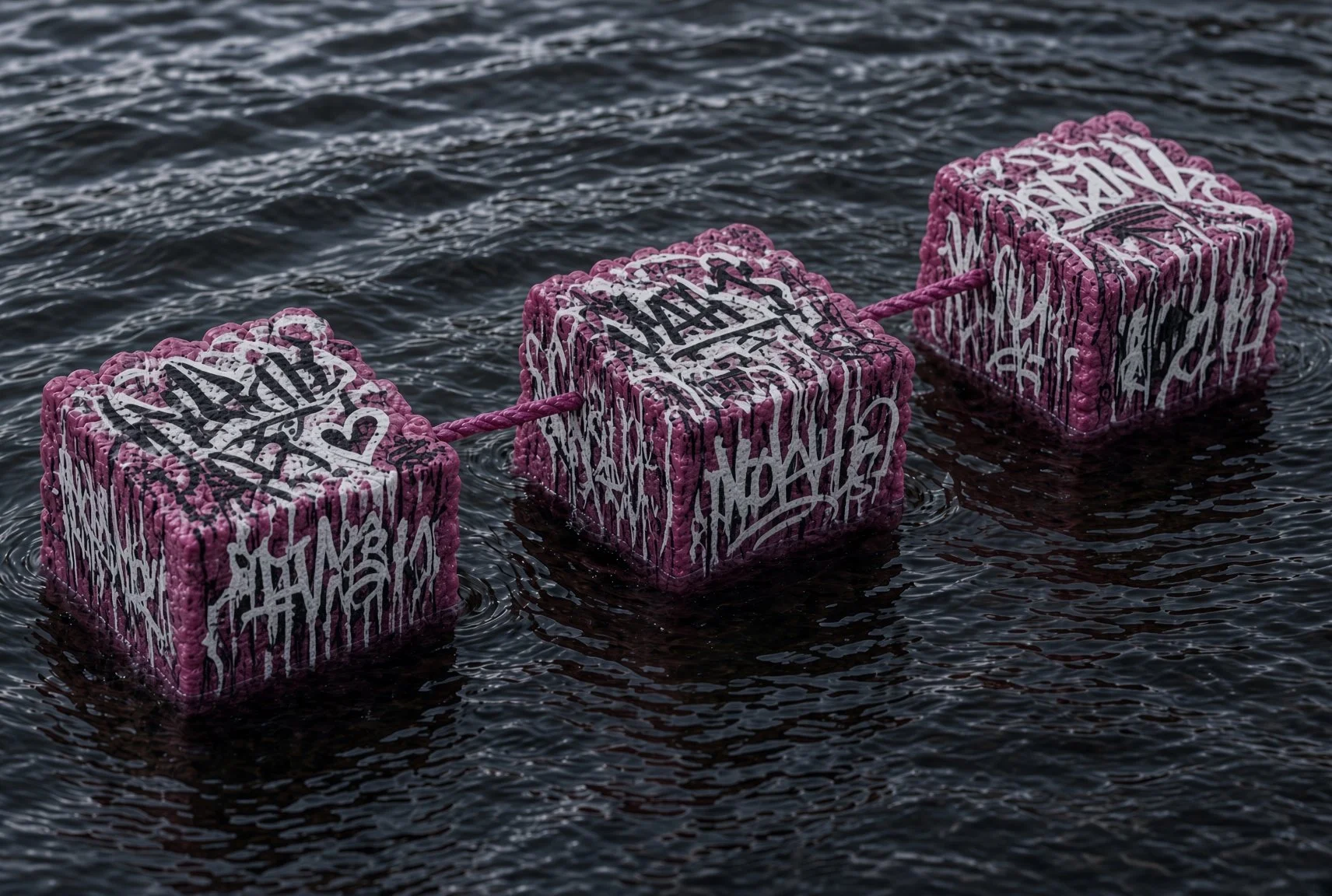
Fifty cubes, each 20 × 20 × 20 inches, of starch shipping-peanut foam colored magenta with beet. Inside each cube: shredded uncoated prints of this waterfront’s own paper — Hudson River Park rules for Pier 64; NYC residency and domicile language; building, waterfront, and sanitation codes for this edge; “no swimming / no launching” notices from the pier; museum admission conditions; and the permit that allowed the cubes to stand here.
The cubes are joined by a beet-magenta cord of PVA laundry-bag film. They occupy the walkways of Pier 64 for six hours. Anyone may mark them with water-soluble black-and-white markers. At the end of six hours, the line is released at the pier edge into the Hudson. Nothing is retrieved. The work is the interval between the last mark and the moment when no cube remains to mark. The geometry is absolute: six equal faces, perfect right angles, closed volume. This is the city reduced to its elementary claim of order, measure, and permanence. Only the Euclidean arrogance of the urban parcel.
Meaning
The city is usually treated as a setting. People act; the pier is backdrop. CITY-SEN-SHIP inverts that. The subject of the work is not the artist, not the audience, and not the dissertation. The subject is this edge of Manhattan as a material fact: timber, ordinance, current, silt, a permit, a sign that says you may not launch.
The city as matter
A city is not first an idea of community. It is mass that holds a claim: pavement, rail, paper that says who may stand here, starch that moved goods to this island, film that wrapped what the city shipped. When those things are inside the cube, the cube does not depict New York. It is a small, portable piece of the same metabolism — logistics, administration, the right angle. Magenta is only the insistence of that claim. If you take the park rules out and put in human text, the matter changes species. You no longer have city-stuff. You have author-stuff wearing the city’s color.
Pier 64 as the subject
This pier is already a sentence the river has been writing. People passed it in 1912 looking for names. The park now writes “no swimming / no launching.” The Hudson writes the waterline on the posts every tide. The Flowevent lasts six hours on that sentence. The public’s marks are not the subject. They are what a city does when it meets an object: it signs, it claims, it leaves a name. Then the pier-subject continues without them. Release at the edge means the work accepts Pier 64 as the one who finishes the piece. Mid-river choreography would put a human back in charge of the ending.
Belonging to a place, not to a human
CITY-SEN-SHIP is a problem here: domicile language, a park permit, a cube that may occupy this walkway only because the paper said so. That is city-belonging — temporary, regulated, tied to a parcel. Belonging to a human is the other lock: my work, my memory, my book, my signature as the thing that must survive. Markers already let humans attach themselves for six hours. That is enough SEN. If the hidden core is also a human document, the dissolve is no longer the city returning to flow. It is a person staging their own afterlife and calling it the city.
Epekimnesis is the name for traces that do not need a subject. The only way the Flowevent stays faithful to that is if what disappears was never primarily yours. The rules of the pier were not written for the piece. The permit exists because the park exists. The Hudson was here before the cubes. Put those inside. Let people write on the outside. Then let the place take both. What remains is not an author’s memorial. It is another temporal image in water that would have been written whether anyone had named it or not.