

STAGONIA
STAGONIA is the temporal image of the leak of a water drop — the spark for endless interleaking between human and nonhuman forces.
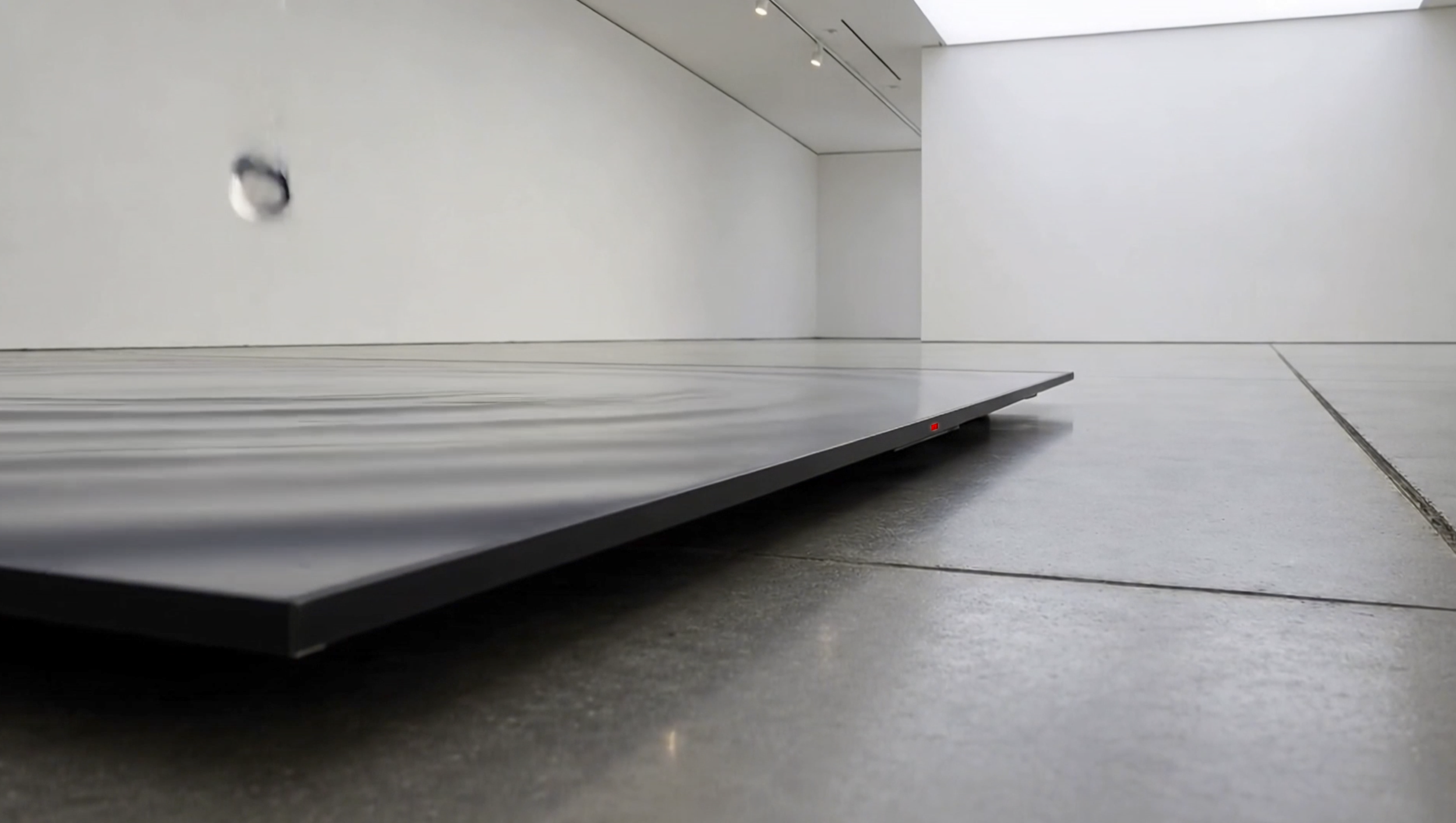
A large horizontal screen lies flat on the floor like a luminous pool of liquid light. The screen is the "mirror" here. From above, real water droplets fall, unpredictable and indifferent. Sometimes quick and light, sometimes pausing in delightful hesitation, occasionally doubling or landing with a gentle, sparkling splash.
Each leaking drop triggers a video of beautiful but humanly reproduced water ripples. The coincidence of real water dripping and the digitally disrupted surface has a magical effect on the viewer, who does not know where they are or on which side of the act their perception is on.
The screen remembers the real dripping on top of it, the digital ripple inside its silicon chips. The screen does not forget both the human and nonhuman water actions, and neither does the viewer. Previous water drops have accumulated on top of, around, and under the screen. A living “Epekimnesis layer,” transforming the device into an object richer, complex, and alive. Ripples begin to interfere with the leaking water rhythm.
Visitors stand around the glowing plane, drawn by the crystalline plink of water meeting glass and the soft, crystalline soundscape rising from beneath. One drop belongs to you. The next belongs to the stranger who stood here minutes earlier. Together, human attention, abiotic force, and technological memory create something far greater than any single intention.
Here, anthropocentrism cracks open not with violence but with quiet wonder. The real water, gravity, and the screen’s indifferent memory gently remind us that there is no “we” outside of “it.” The image does not belong to the artist. It belongs to everyone who stopped, looked, and let the leak do its work.
Visitors leave carrying a subtle awareness of their own precarious position — one small, temporary presence in a universe that continues to leak long after they have walked away.