PAKET INSTALLATION PLATE
PACKET
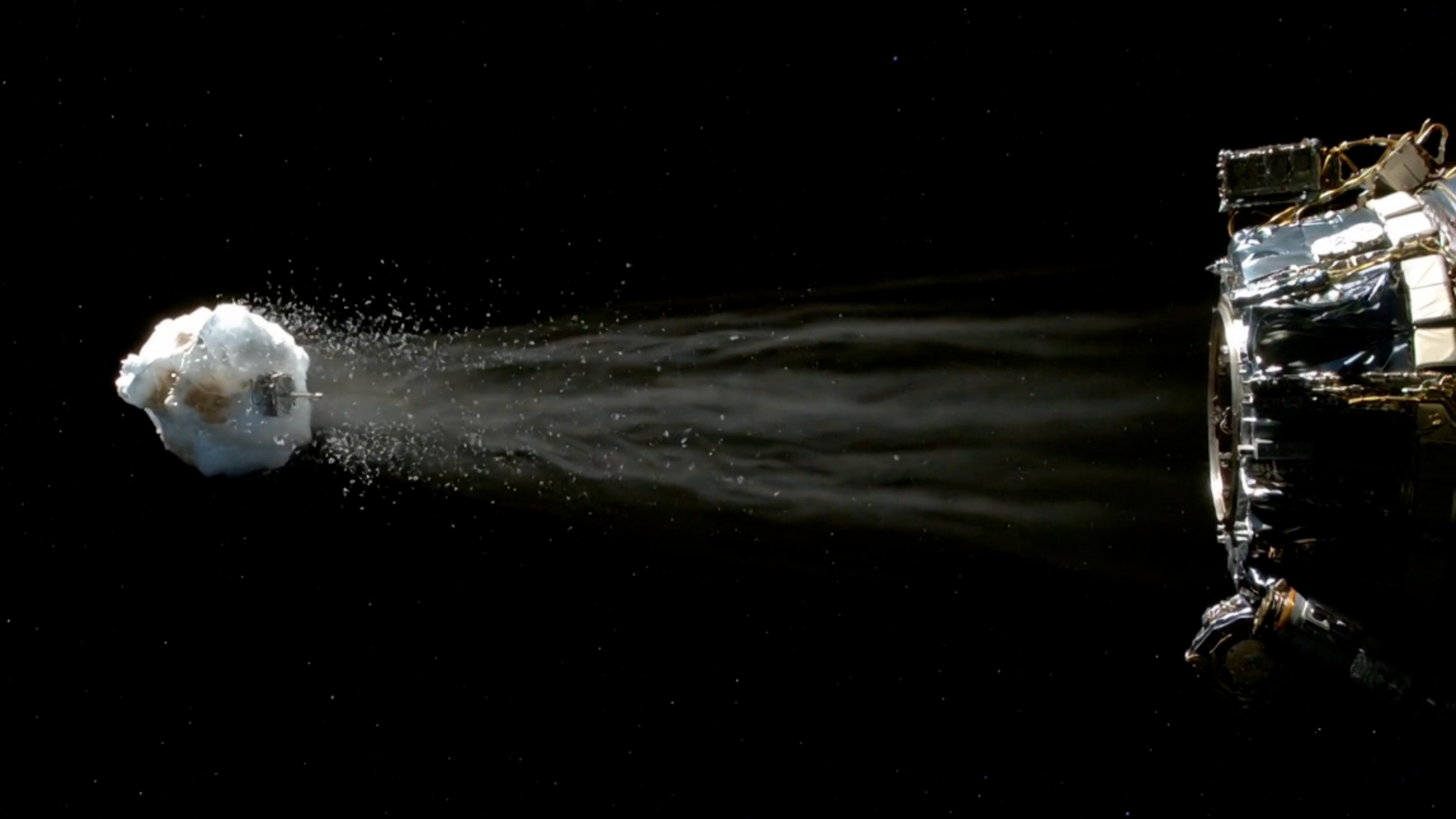
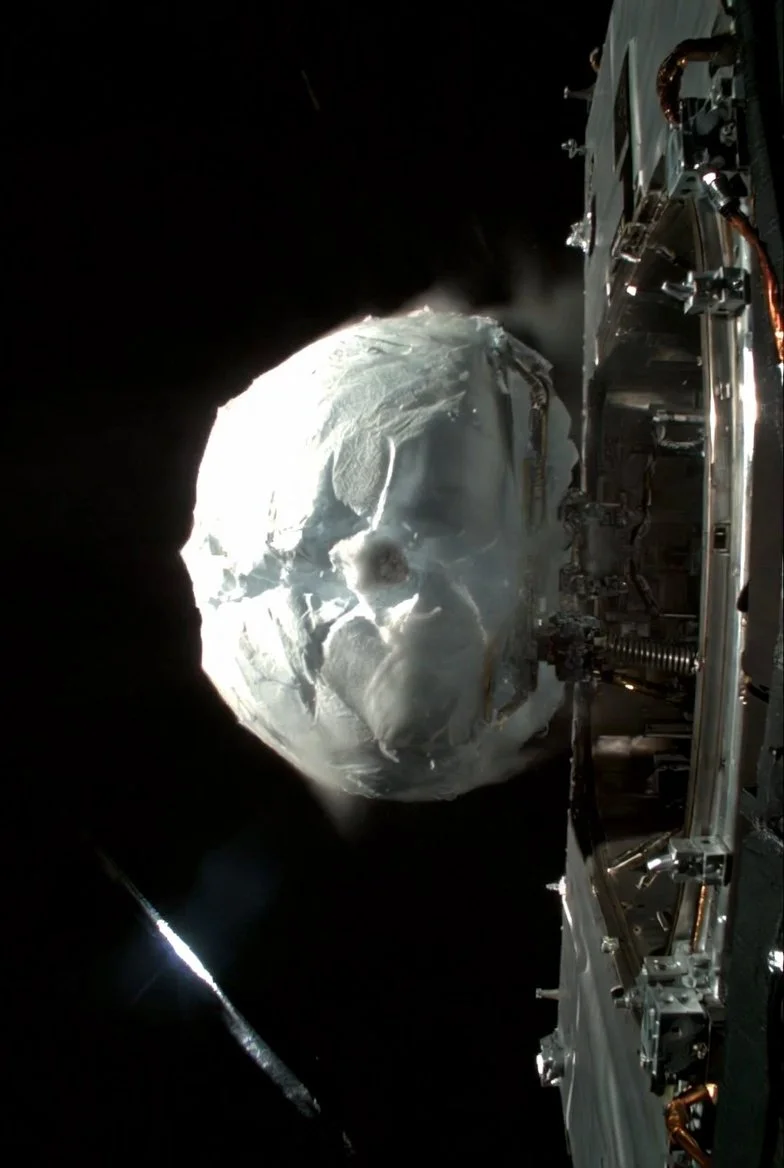
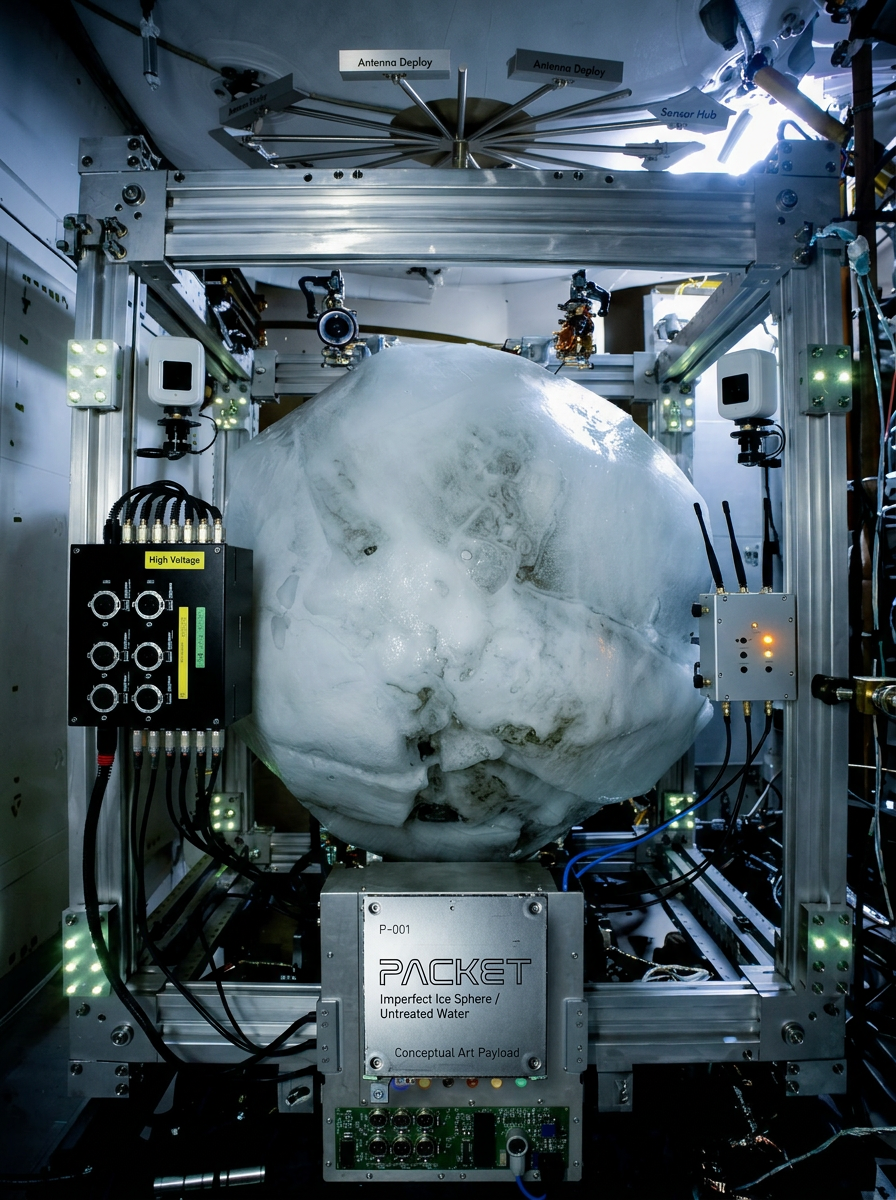
It is a sphere of untreated water — sediment, microplastics, and isotopic traces intact — that is flash-frozen without internal structure, pattern, or counting. The size is approximate, with no specific place of origin and no direct or symbolic representation of any human or non-human element of terrestrial life. A packet of iced water from this planet.
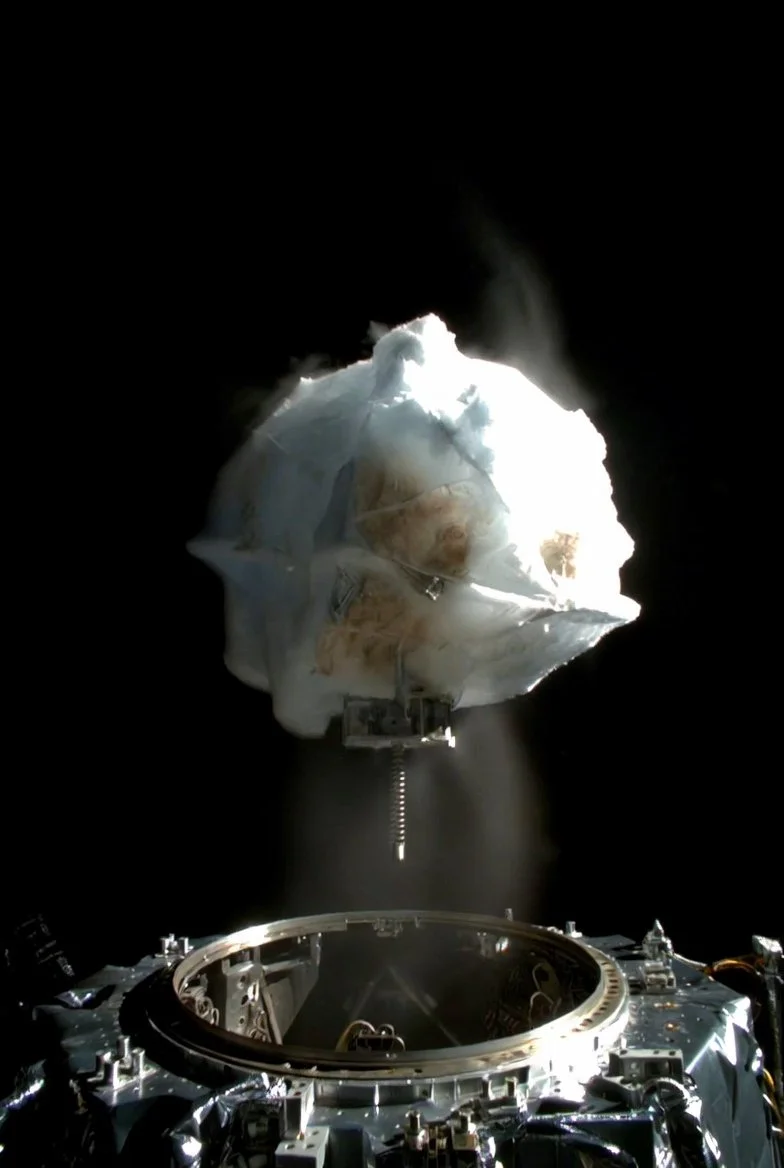
The sphere is placed into a minimal CubeSat payload and inserted into a short-lived decaying orbit. It sublimates under vacuum and radiation according to physics alone. The dispersal is unwitnessed and undocumented in real time. Some vague feeds. Some low-resolution imagery. Some description (this one).
The sole public element is a single, terse statement:
"This Packet was launched. It adds a statistically meaningless quantity of terrestrial water to near-space before dilution or destruction. Any additional meaning attributed to the act is imposed by the viewer."
The work consists primarily of the unresolved contradiction it embodies: a human intention to perform indifference that cannot escape its own anthropocentric origin. Epekimnesis (the abiotic memory) appears here only as the inevitable softening of that imposed intention into abiotic irrelevance.
No extensions. No references. No reciprocity narrative. No gratitude. No apology. No soul. No metaphors.
The thinking — the failure of the gesture to achieve true decentering — is the complete work. The physical packet is merely its inadequate proof.
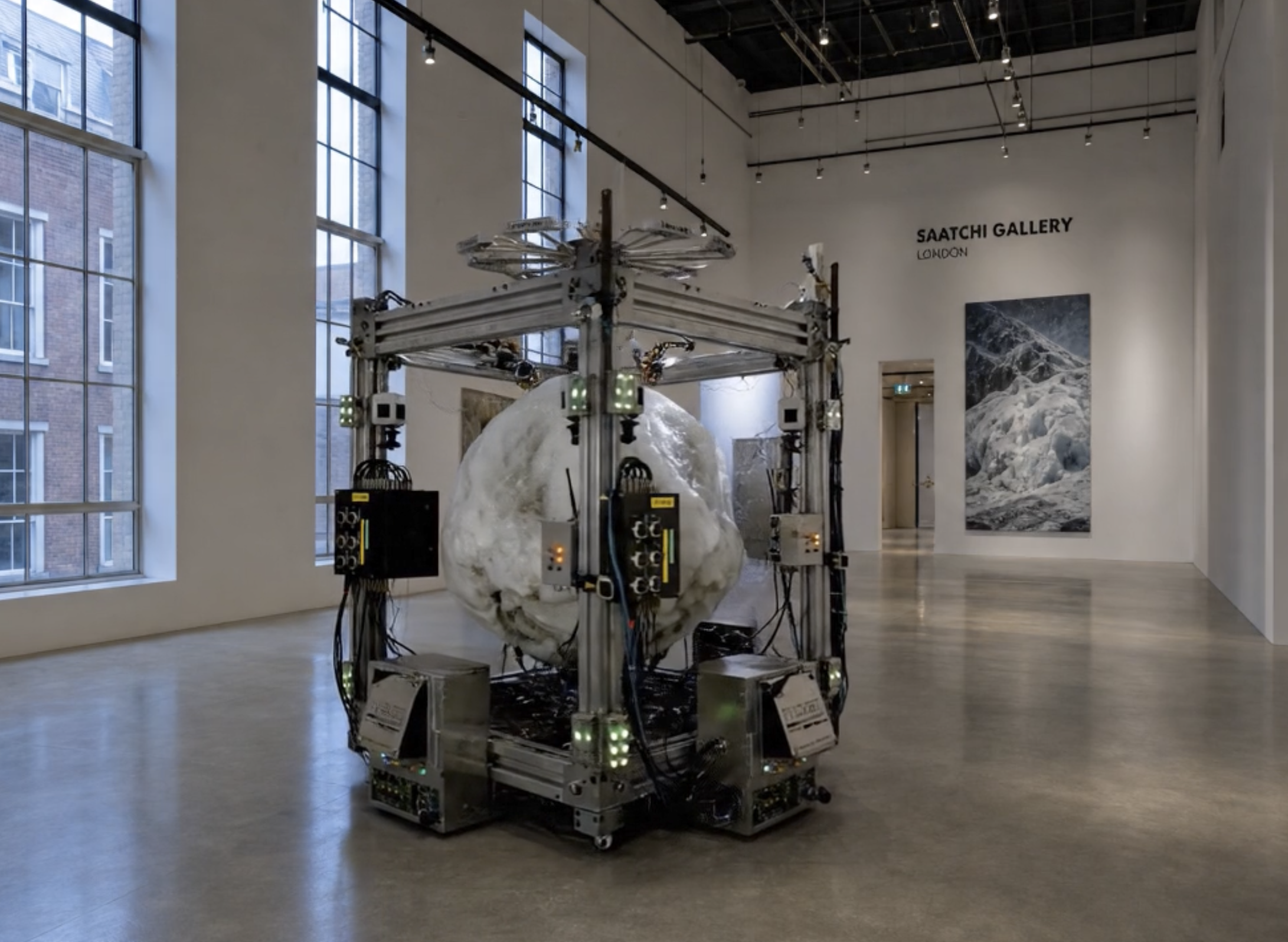
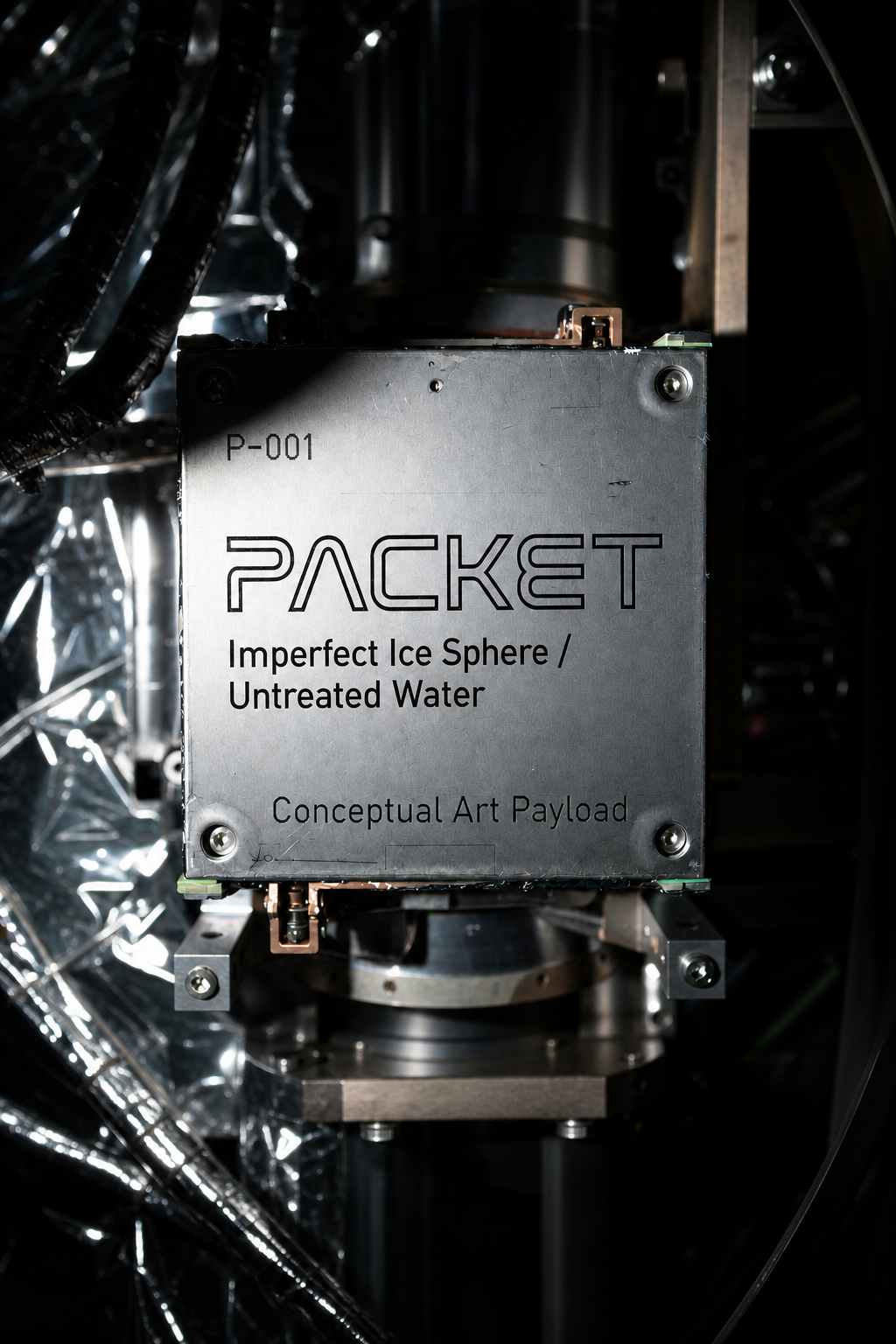
Installation of PACKET on CubeSat loading module
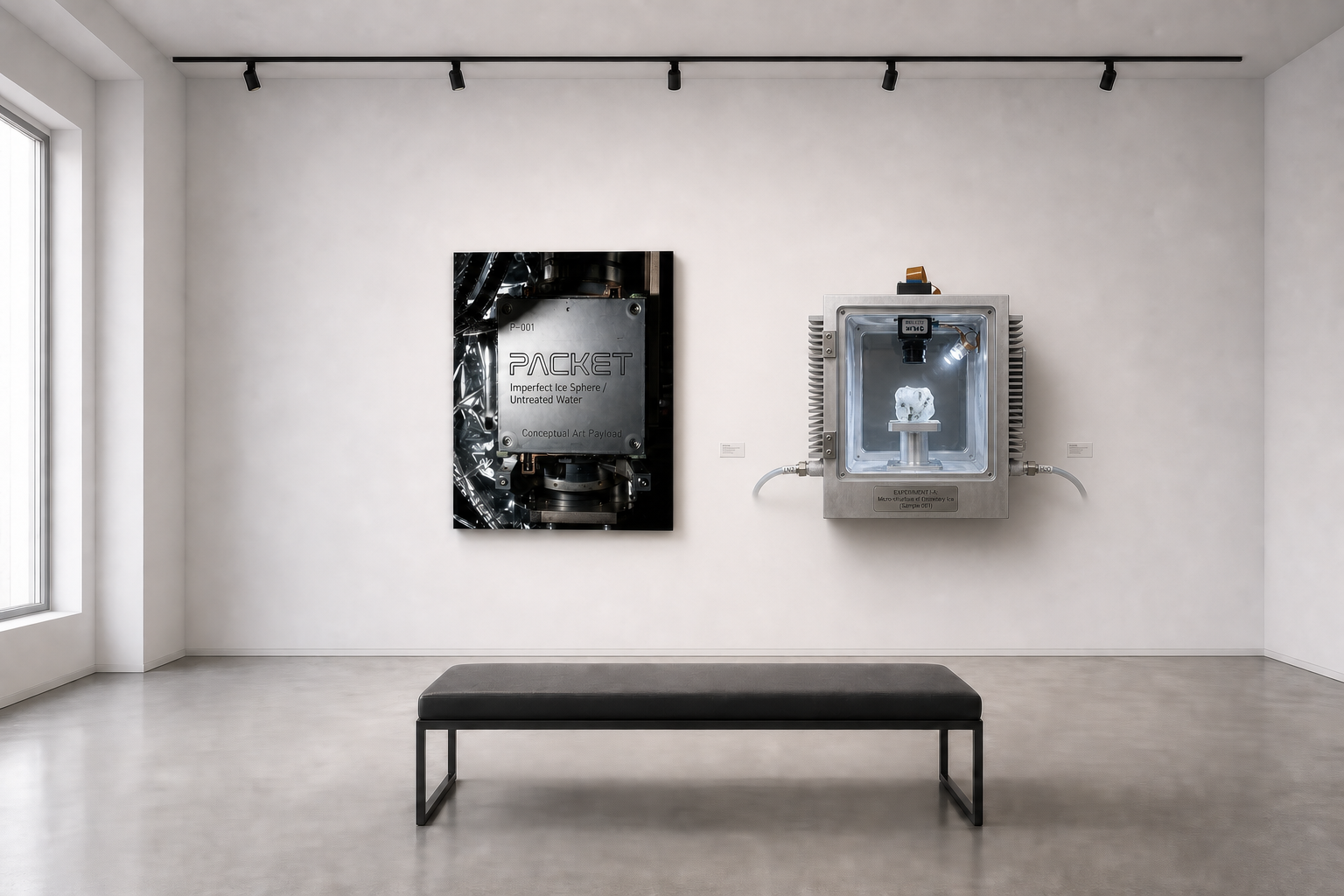
GALLERY VIEW
Gallery View
The core of Packet is the unresolved philosophical contradiction (not spectacle), the exhibition is intentionally sparse, quiet, and accessible—designed to draw viewers in gently rather than overwhelm them.
Main gallery space:
A single, modestly sized white or softly lit room (one of Saatchi’s smaller side galleries). Dim, even lighting with one focused spotlight on the central object. No video loops, no dramatic projections—pure minimalism that feels contemplative rather than cold.
Central exhibit:
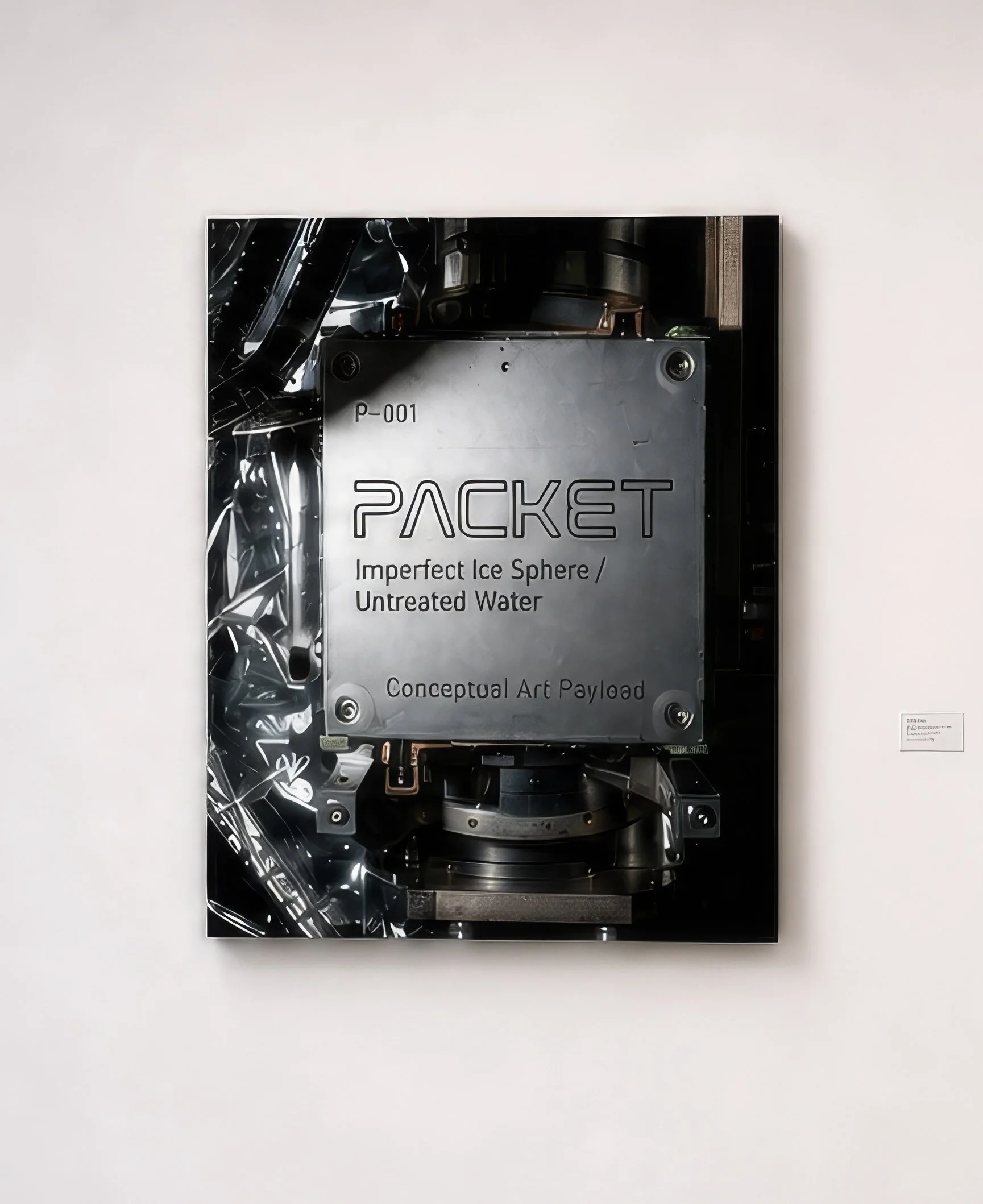
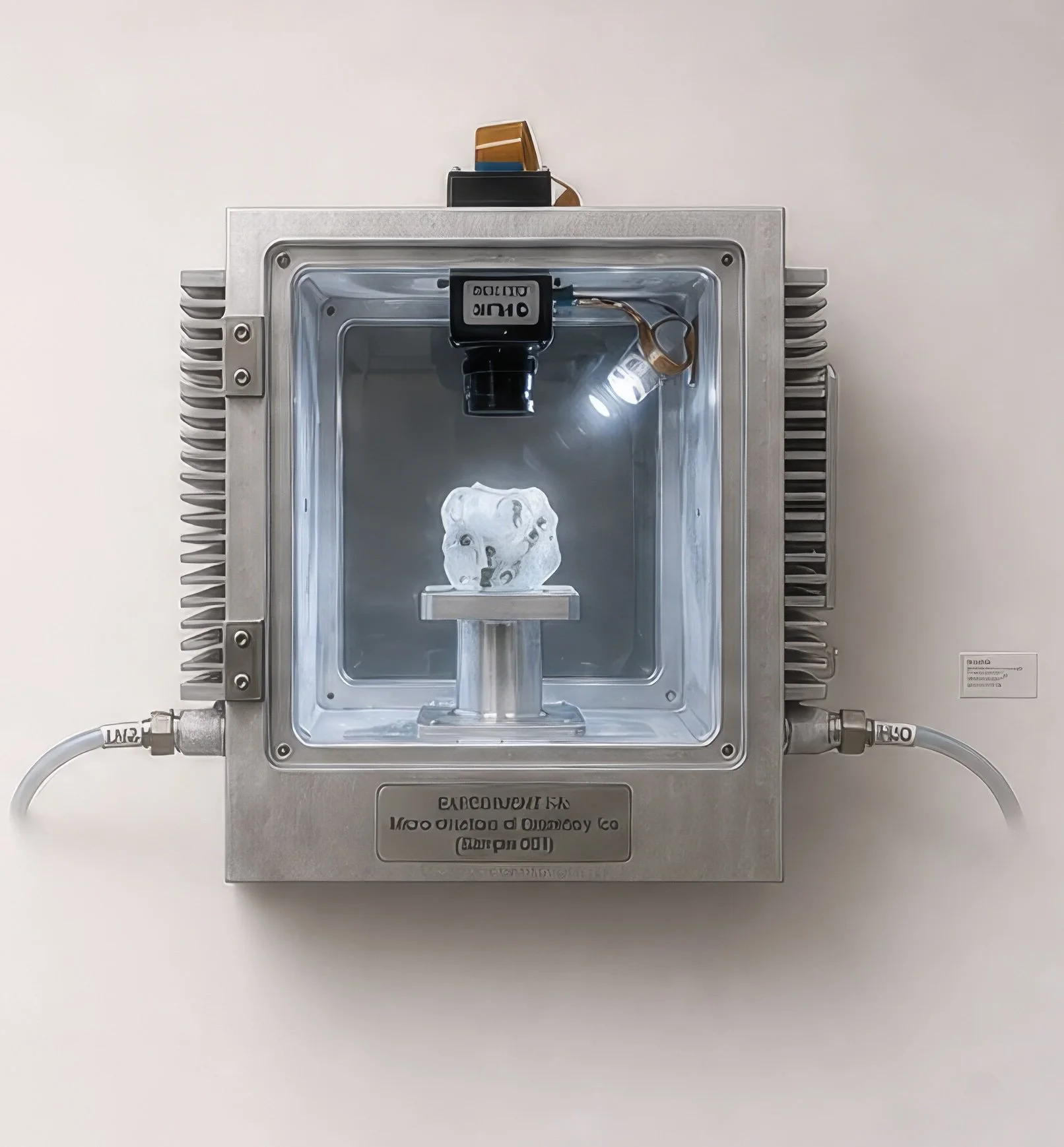
The actual aluminum identification logo plate (brushed metal, laser-etched “PACKET” text) mounted on a simple plinth or recessed in a shallow vitrine. Beside it, a small, sealed display case containing a fist-sized test fragment of the same Hudson River ice (kept frozen in a discreet mini-cooler display unit so visitors can see the raw, imperfect material up close).
Text elements (large, friendly typography on the wall, easy to read):
The single terse statement exactly as written. A short, plain-language wall label: “This is all that remains of Packet. The ice sphere was launched. Everything else is the viewer’s projection.”
Optional gentle additions for friendliness: A small bench for sitting and reflecting; a discreet QR code leading to a one-page PDF of the full conceptual text (no images of the launch). Nothing else—no sound, no explanatory essay, no photos of the CubeSat.
The room invites quiet curiosity: visitors enter expecting “space art” and encounter only a metal plate, a bit of ice, and a blunt sentence. The sparseness feels welcoming rather than forbidding—people linger, read, smile at the absurdity, and leave thinking. It fits perfectly into Saatchi’s history of large-scale conceptual shows while staying true to the project’s anti-spectacle ethos.
This is fully producible today with existing commercial space infrastructure, at a cost that is high but within reach for a serious gallery-backed or institutional commission. The thinking remains the real work; the launch is merely its inadequate proof.