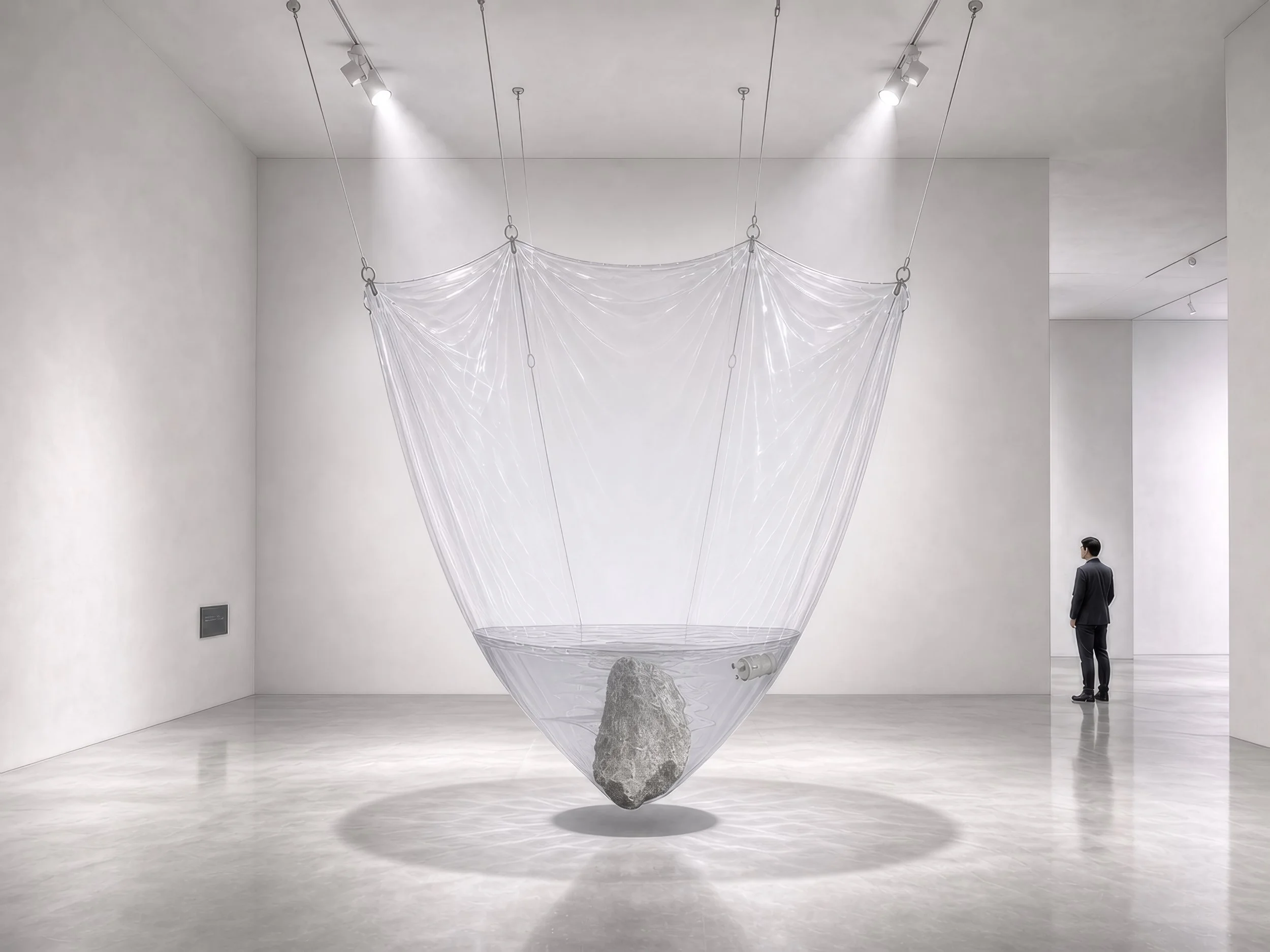
STRONGILOTEA
The continuous rounding of soft stone by moving water is a temporal image of epekimnesis. It is an acausal tracing that proceeds without human meaning or intention. Yet this tracing is not external to thought. It is a thought of reality itself.
Reality has no brain of its own. It uses the biotic brain to think. The human sensorium and the human mind are the instruments through which abiotic processes become thoughts. Epekimnesis is one such thought of reality, enacted in the brain that registers the residual geometry of stone and water.
STRONGILOTEA is the proof of this enactment.
When the biotic eye captures the stone in the act of rounding, reality is thinking through that eye and that brain. The process of abrasion does not acquire meaning from the viewer. The viewer’s thought is the form that reality’s tracing takes at that moment. The artwork is not the stone, not the water, and not the continuous process. The artwork is the event in which an abiotic tracing becomes a biotic thought.
What the biotic calls Aesthetic, or Beauty, is the name it gives to this forced collaboration: the moment when reality uses a human brain to think its own indifferent process. Beauty is not a human addition. It is the sensation that accompanies the enactment.
STRONGILOTEA exists only while this enactment is occurring. When the eye withdraws, the process continues without thought until another brain is used again.
ABIONOESIS names exactly the claim placed at the center of STRONGILOTEA: thought that is abiotic in origin, enacted only through a biotic brain. Reality has no organ of thought of its own; it uses the human sensorium and the human mind as the site in which its tracing becomes thought. Epekimnesis is one such abionoetic event. STRONGILOTEA is the proof that the event is occurring — the moment the biotic eye captures the abiotic rounding and, in that capture, reality thinks.